Handbook-subarticles
Book title
White as Milk, Red as Blood
Author
Alessandro D´Avenia

Bibliographic information
Publisher: Algoritam
Translation to Croatian: Dubravka Oršić
11/2011.
220 str., oft cover
ISBN 978-953-316-167-9
Links (adaptations, reviews, full texts etc.)
http://movies247.net/watch/bianca-come-il-latte-rossa-come-il-sangue-9977
http://readersdoitbetter.blogspot.com/2015/03/bijela-kao-mlijeko-crvena-kao-krv-i-evo.html
Theme
The story of a young man Leo, who is in love with Beatrice, is written in the form of a Diary. It shows typical teenage as well as general problems between the young and old, search of identity, and facing death as well as loss.
Short summary
Leo is a sixteen year old who plays soccer, he doesn’t like school and doesn’t do well with adults. He is in love with Beatrice, a girl with read hear, he tries to collect the courage to come up to her and tell her how she feels. At the same time, he is figuring out who he is and what kind of a person he is, what really interest him and what he wants to do in life as he confronts his professors too. He finds out that Beatrice is sick which really affects him and his view of himself and the world. Facing the pain, professor Dreamer and his friend Silvia (met Beatrice with him) help him through. Leo and Beatrice connect and spend a lot of time together, learning a lot about life, themselves and start to affect one another. Unfortunately, Beatrice loses the fight and Leo has to face the loss of a loved one. This is a novel about growing up and facing the greatest loss of life – losing a loved one, the novel also consists various links with art – especially with Dante’s creativity inspired by Beatrice.
Why is the story appropriate for the targeted groups of RSP readers?
- It is written in simple conversational style which is easily understood and close with students, simultaneously very visual, metaphoric and symbolic.
- It is written from the perspective of a sixteen year old, which in a funny, rebellious but truthful way talks about typical problems of a high schooler (love, school, professor and parents)
- He talks about searching his identity and facing himself, his emotions, fears, and especially about illnesses and death.
What are the distinguished readers interests reflected by this book/story?
This is a love story which is not typical because it shows the growth of a young person and facing real life situations. From the perspective of high schoolers, he reevaluates about the existence, society, education, relationships between the young and old, dreams, God and religion as well as death and love.
Why is this story motivational for the pupils?
The theme and style make this book encouraging for both girls and boys. It is easy to relate with the main character and his problems, which motivates them to think about their own feelings, helps recognize and accept emotions of other too. Facing with the loss of a loved one is truly painful, it is a life changing moment in everyone’s life, and this book truly motivates to talk about such topics.
Is there a historical, political, multi/inter cultural, migrant or similar context recognized in this book/story?
An educational-cultural context is visible – the students can compare the Italian school system with the Croatian one, they can think about the technological progress and everything that is available to them through education and life, and compare with the creation of live during the pre-renaissance period.
Is there a principle of inclusion reflected in this book/story and does it promotes understanding of cultural diversities and heritage?
Enrolling a student in a regular school system – relationships between student and professor, breaking the stereotypes about teachers, as well as their interests and rebellious side of a student (often present in the emotional aspect of a student).
- Details
- Parent Category: Handbook
Book title
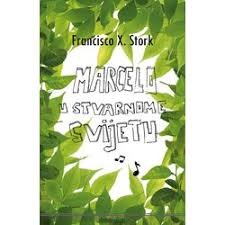
Marcelo in the Real World
Author
Francisco X. Stork

Bibliographic information
Algoritam, Zagreb, February 2011., First edition
ISBN 978-953-316-180-8
Links (adaptations, reviews, full texts etc.)
http://www.najboljeknjige.com/content/knjiga.aspx?BookID=801
Theme
The resourcefulness of Marcelo in the real world as well as having a lot of knowledge in different human emotions.
Short summary
Marcelo often talked about himself in the third person; he lives in a tree house and works with religion and philosophy. He often hears music in his head which no one else does, and he loves his school in which his distinctive feature is one of many there. He is excited that during the summer before the last year of school he will spend with horses used for therapeutic riding. Unfortunately Marcelo’s father asks him to work in his father’s law firm as he believes that that will help him learn what the real world is. Wanting to please his father, Marcelo accepts the job and makes friends with Jasmine and Wendell. As the summer passes by, he faces new emotions, ideas and ways of behavior and only time will show if he can deal with it.
Why is the story appropriate for the targeted groups of RSP readers?
- encourages the development of social interaction
- Brings up the question of identity – encourages the reader to think about their identity, identity of their peers (the ones that want to separate themselves from others), the question of would they accept someone that is different rises, or do they choose to stay with the ‘perfect’ person who would be the leader and direct.
- Encourages the understanding of differences among their peers.
What are the distinguished readers interests reflected by this book/story?
This story shows an individual who is aware of his differences and accepts his father’s request of joining him in the real world. This is a challenge of itself with facing the life of adults, accepting responsibility without any parent protection.
Why is this story motivational for the pupils?
The story can be interpreted in different ways – family relationships, the rough world of working in the lawyer world, and rush of emotions – facing emotions (friendship – love – sexual pleasure).
Is there a historical, political, multi/inter cultural, migrant or similar context recognized in this book/story?
- Educational-historical context – today, the main focus is in the integration and inclusion of personal and professional development in regular programs due to the socialization aspect.
- The possibility of comparing school systems here and in the Anglo-Saxon countries.
- At the end of the 80’s and beginning of the 90’s in America – policy for funding funds for kids with Autism (help in education and everyday lives)
Is there a principle of inclusion reflected in this book/story and does it promotes understanding of cultural diversities and heritage?
Inclusion is present by attending regular school. Encourages understanding and tolerance in joining already existing system.
Students can examine the American educational system, and compare lives of their peers ( becoming independent, work, life with parents…)
- Details
- Parent Category: Handbook
Title of Activity
Who will join my group of friends?
Description of educational activity
Duration: 2 x 45 minutes
Student age: 16-17 year olds
Student Class organization: group work
Lesson goal:
- Analysis of the relationship between literary characters, empathy development,
- Encouraging critical thinking about the relationship between peers and group pressure in their own environment
Support materials:
- Internet
- Magazines containing topics from teenagers' everyday life, TV series
Highlights:
- 3 texts
- sticky notes
Activities:
reading, interpreting and discussing the text, watching and discussing video clips
I. Activities before reading
- Thematic approach: "Santana vs. Beethowen "- explore the influence of rock music and classical music on cognitive and affective abilities, attitudes, style, subculture of youth
- Thematic approach: "You instead of me" - explore how children with this cognitive disorder often call themselves by their name
- Thematic Approach: "Life with Parents during 35" - Using TV series to compare the lives of peers, becoming independent and employment opportunities in Republic of Croatia
II. Activities during reading.
The 1st group gets job lists - they will read:
- episode with dad - students in the group read the default part (Chapter 3) and answer questions using the Placemat method - a sublayer, the goal: the group should noticed the problem of communication between Arthur and Marcela, the problem of unrealistic parenting
- Forming groups to discuss whether Marcelo should stay in Paterson or go to a regular school in the final grade?
The 2nd group gets a working paper, will read:
- episode with Wendell - the students in the group read the given chapters (chapters 8, 9 and 13) and solve the tasks using the method of reciprocal reading as well as discussing the problems that are observed in the texts - problem of student violence, communication problems, loss of self-confidence and motivation
The 3rd group gets a working list, it reads:
- episode with Yasmine - the students read a part of the text (Chapter 24), dramatize it and determine the pool of emotions in Marcel's head - Friendship, Sexual Pleasure, Love.
III. Common activities after reading.
- a debate on Marcelo and Ixtel - Victims and / or Heroes? - The students put forth their arguments and explain them, answering questions: How are the heroes of this story exceptional and different from other characters? Do they remind us of people of the real world? Ex. events and people we hear over the media?
Evaluation and Assessment Method:
- Teacher Role - Prepare Materials and act as a Moderator
- Method all around - Group work activity, used in the evaluation phase - one paper and pen is sent from member to member in the group - during which evaluation is written.
Students are evaluated on the basis of the following:
- knowledge of the content and forms of literary texts from different regions and cultures
- engagement around the idea of writers and their approach to the topic and the handling of the text
- Recognizing the ways in which texts relate to broader contexts
- empathy, recognition and appreciation of a wider context
The Impact of Activity on Reading RSP Readers:
Practices initiate a process of thinking in the students minds leading to what may be called greater cultural sensitivity, increased awareness of cultural differences and cultural communities - not only for race but also for gender, social classes, etc
Connection to curriculum
Class: sophomore year
Curriculum:
World Literature - reading for pleasure
Civil upbringing and education - developing conflict resolution strategies, peer violence
English Language and Literature - US writer Stork
Musical Arts - Classical Music, Rock Music
Knowledge:
- broad and universal issues
- better understanding of yourself and the world around you
- enjoying the experience of reading literary literature
- Understanding the problem, answering questions related to the position of young people, influence of music, student relationships, identity issues
- Critical thinking about the world, family, work
Skills:
- Collecting, selecting and evaluating background information
- reading, interpreting and evaluating literary texts
- Effective collaboration in groups
- Empathy during groups works
- preparation and performance of "role play"
- improvisation, especially in speech
- discovering the possibilities of one's own learning during active participation
- mastering the elements of debate
Competence:
- Intercultural and Communication Competences
- Understanding cultures as a comprehensive approach to literacy.
- a positive attitude towards different ways of thinking / prayers / clothing style or behavior, openness and tolerance
Bibliographic reference to be used during the activity
Francisco X. Stork: Marcelo in the real world
Algoritam
Zagreb, February, 2011.
Results
Expected outcomes:
Students will be able to:
- express clearly the critical / analytical and interpretative understanding of the text
- select the text references individually
- reacted to the way the language works in the text
- to respect the opinion of others, to clearly and precisely argue their own opinions
Recommendations
The text can help increase the interest of students to read. The elements of the detective stories may also be of interest to students to read the novel entirely.
- Details
- Parent Category: Handbook
Book title
Just let it move
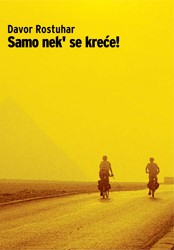
Author
Davor Rostuhar

Bibliographic information
Publisher: Klub za ekpedicionizam i kulturu
2003., 2006., 2009.
256 str.; 154 photos
soft cover
ISBN 953-99434-0-X
Links (adaptations, reviews, full texts etc.)
http://ebook.arribadarlington.co.uk/7452940/by-ebook-arribadarlington-co-uk/samo-nek-se-kree.html
https://www.goodreads.com/book/show/7452940-samo-nek-se-kre-e
https://www.videoland.bid/?id=JoEGcqpgTYo
https://www.ngbuntovnici.hr/index.php/separatum-votum/izdvojeni-glas/692-uz-mjesec-hrvatske-knjige-knjizevne-preporuke?cookie_27803885cfd6a24a1a4d3c7723f4874d=accepted
Theme
Two friends, a twenty year old named Davor, also known as the writer, and friend Vedran decide to travel the Mediterranean by bicycle, riding 8000 kilometers in 283 days, passing through 12 countries on 3 different continents.
Short summary
Everyone dreams or has a dream already, someone dreams about new things, some dream about traveling. His childhood dream was shared with his childhood friend, and together at the age of twenty decided to go on a trip around the Mediterranean. That trip was a challenge in every aspect, but it brought them the ability to visit new places and countries, meet new people, cultures and traditions. Bicycling from Zagreb to Montenegro, Albania, Greece, Turkey, Syria, Lebanon, Israel, Jordan and Egypt, the author questions life, religion, relationships between man and woman, the good and bad in people and other universal questions with which people can be occupied by. On the trip he questions himself, his limits with meeting new people – from poor Bedouins, to odd people, and ascetic priests, as well as soldiers and rich people who all pass the valley of Ephrata, a dessert which continues up a mountain covered in snow, sleeping under the stars or small basement of abandoned buildings.
Why is the story appropriate for the targeted groups of RSP readers?
It shows adventure – a trip around the Mediterranean by bike from a twenty year old perspective.
- The readers can identify themselves with the writer who from first hand talks about how to organize a trip with a modest budget, how to manage and communicate in a culture totally different to the one they know, and that everything in life is possible and achievable
- The simple writing style is stimulating for the readers.
beneath the surface.
What are the distinguished readers interests reflected by this book/story?
Traveling was never accessible for young people as much as it is today, for that reason this book offers a remarkable experience and pleasure of travelling by bicycle. It shows that traveling doesn’t have to be to well-known places, staying in hotels and without getting to know the real world and culture of the local people – traveling offers coexistence, becoming independent as well as mature, as well as communication and interaction with indigenous areas and people.
Why is this story motivational for the pupils?
Students can easily identify with the writer who’s also around the same age, they come from the same or similar environment, and have interests and facts about realizing childhood dreams. The ease of reading this book comes from the simple and understandable language, as well as universal theme that promote getting to know the unknown and accepting the new.
Is there a historical, political, multi/inter cultural, migrant or similar context recognized in this book/story?
Yes, during the ten month trip, the two young men faced and stayed in places that were unknown to them – the borders between East and West, division of Beirut in which they asked you to decide. Arab, Palestinians, justice and freedom or Israel, America, Jews, money, brutality and crime, encounter with migrants, peace activists, cooperating with ecologists etc.
Is there a principle of inclusion reflected in this book/story and does it promotes understanding of cultural diversities and heritage?
Yes, the protagonists are getting in touch with new situations and are taking to consideration the differences even though they have different beliefs – the openly talk about religion, and reevaluate the patriarchal society as well as rethink about the cultural differences where they try to understand all of it. The two men do not accept the limits that can be created by the cultural and religious barriers, and thus accept the hospitality and society through every social status promoting multiculturalism and respect the environment they visit with its peculiarity.
- Details
- Parent Category: Handbook
Title of Activity
Culture collisions
Description of educational activity
Duration: 2 x 45 minutes
Student age: 18 – 19 (senior year)
Student class organization: group work
Lecture goal:
Shaping their own attitudes, explaining and proving them
empathy development
Supporting materials
- Internet
- Class leaflet
Highlights:
- 4 texts
- sticky notes
Activity:
reading, interpreting, and discussing the text
-
Activity before reading
Provides motivation, allows students to share their own experiences/opinions, group cohesion
-
The students are divided into groups of four. Each group gets one task.
Introductory text
INTRO (str. 5 – 8)
After common reading of the introductory text the students work in groups:
-
Outline 3 thoughts from the text that are stimulating and explain why.
-
Mention your childhood dreams and choose the ones that are achievable in the future.
-
Apply the sentence in the context of personal challenges: In the past, the whole world was explored; the highest mountains were concurred and the farthest points were visited. I knew I wasn’t doing something new, but for me, it was the start of discovering the world.
-
Presentation of group results and short discussion.
II. Activities during and after reading in group.
- The groups receive parts of the story and teaching leaflets (each group reads one part)
a) Syria: Driving along the Euphrates (page 63 - 64)
Basic task: Describe the writers travel concerns and state the reasons. Explain how to reconcile their cultural heritage and cultural orientations of the new environment. Explain the possibility of intercultural understanding.
Analysis: male-female relations; gender equality; cultural differences; intercultural
b) Syria: In Bedouin tents (page 75 - 76)
Basic task: Explain who the Bedouins are, how and what affects their nomadic way of life. Compare Bedouin's hospitality and their weak sense of ownership with Western culture.
Analysis: the impact of natural environment on people's lives; cultural differences
c) Israel: For Peace! (pp. 162-164)
Basic task: Describe the life of refugees. Explain their sense of helplessness sense of never getting a break.
Analysis: refugee status; meaninglessness of the war; (no) possibility of change
III. Common activities after reading.
Presenting group work results.
Discussion: Be an observer or participant. Actualization of issues and updates
Evaluation and Assessment Method:
Teacher Role - Prepare Materials and act as a Moderator
Evaluation of work in groups - questionnaire: evaluation and self-evaluation
Students are assessed on the basis of their abilities:
· Reading with understanding and shaping their own opinions and arguments
· Participation in a argumented discussion
· presentation of group work - systematic and structured presentation
The Impact of Activity on Reading RSP:
Activities encourage intercultural understanding and development of students' empathy.
Connection to curriculum
Class: Senior year
Curriculum:
Language Expression - Discussion
History
Geography
Ethics
Knowledge:
- better understanding of yourself and the world around you
- Critical thinking about the world, society, religion
- Enjoyable reading experience
Skills:
- collection, selection and evaluation of information
- reading, interpreting and evaluating literary texts
Competence:
- communication competences
- intercultural competences
- ability to work in a team, and acceptance of someone different
Bibliographic reference to be used during the activity
Davor Rostuhar: Just Let it Move!
Publisher: Klub za ekpedicionizam i kulturu
2003., 2006., 2009.
256 pg.; 154 photographs
Soft cover
ISBN 953-99434-0-X
Results
Expected outcomes:
Students will be able to:
- clearly shape their attitudes and arguments
- actively listen to others
- use and accept etiquette communication
Recommendations
The work is appropriate thematically and is content targeted to group of readers. It also motivates to select other works by the same author or similar works of another author.
- Details
- Parent Category: Handbook
Book title
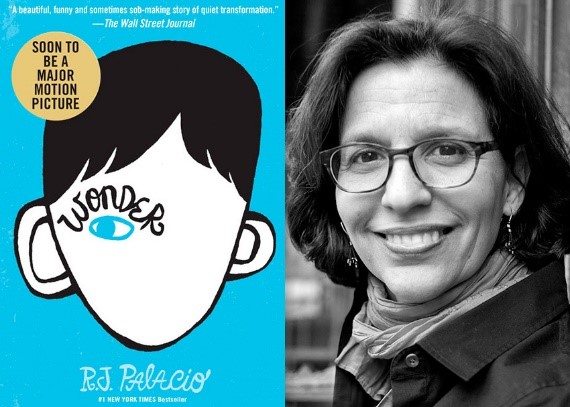
Wonder
Author
R. J. Palacio

Bibliographic information
Publisher: Fokus komunikacije
03/2016.
324 str., Soft cover
ISBN 9789533490090
Translated from English: Tamara Kunić
Links (adaptations, reviews, full texts etc.)
- http://www.bibliovca.com/2014/10/13/cudo-by-r-j-palacio-recenzija/
- http://www.najboljeknjige.com/content/knjiga.aspx?BookID=6188&tab=2
- https://citajknjigu.com/cudo-r-j-palacio/
- https://arteist.hr/chboskyjevo-cudo-poziva-na-empatiju-i-slavi-razlicitosti/
- www.youtube.com/watch?v=EsUKB4fh9fM trailer
- http://www.moj-film.hr/film/glumci/cudo/
- http://zagrebfilm.hr/film/tolerancija/
- https://meduza.carnet.hr/index.php/media/videos?pack=353
- https://hrcak.srce.hr/index.php?id_clanak_jezik=181285&show=clanak
Theme
Auggie Pulman is a ten year old boy who lives with his parents and older sister in New York. He was born with a face deformity and was homeschooled his first four years due to various health issues. Soon, he will start the fifth year of school in Beecher and it will be his first time to be surrounded by kids his own age.
Short summary
There are books we read that we just forget the moment we are done with, and then, there are books which make us think even after we are done with them, well, Wonder is one of these books. Written by Raquel Jaramillo, under pseudonym R. J. Palacio.
This is a book about August Pullman, whose nickname is Auggie. He is a ten year old boy, who suffers from atypical problems. It’s not about normal girl problems, fights with parents, or school.. However, Auggie is starting school! Although he is ten years old, he spent half his life having operations due to his face deformity. He was homeschooled and lived under the rock.
Although Auggie is smart, heart touching and funny, the first thing people notice is his face, which he describes quiet openly and brutally. Due to the unavoidable reactions, as well as bullying, his parents wanted to protect him, which is the reason he was homeschooled. Fifth grade however, is the breaking point and Auggie is hesitating to go to a real school.
You can just imagine what happens next – from pity to bullying, and acceptance and rejection. The fifth grade for Auggie is becoming a real life lesson, where he learns to fight for himself. Facing up to his peers and professors, who all have different reactions to his face, and Auggie finally starts to accept who he is. Not only is it helping him, but he is giving a lifelong lesson to others too.
(From www.najboljeknjige.com)
Why is the story appropriate for the targeted groups of RSP readers?
It teaches us to accept who we are
- How to overcome fear from the unknown
- It teaches us how to understand and accept differences: there is no easy way, we just need to act normal
- It raises up awareness that people don’t see what is important in certain situations, example: don’t judge a book by its cover, it is important what is beneath the surface.
What are the distinguished readers interests reflected by this book/story?
The book answers a lot of questions, even though Auggie is different, he faces problems like his peers do. Why do I have to go to school? How to know who is a real friend? Am I the only one who has problems with their siblings? Am I accepted in the family and society? Why me?
Why is this story motivational for the pupils?
The students can identify their own problems, and find answers to them by trying to find their identity and answering to the questions, Who am I? Who am I in comparison to others?
Is there a historical, political, multi/inter cultural, migrant or similar context recognized in this book/story?
Multicultural context is visible in the story of Auggie because the novels setting is in New York, a multicultural environment, a city full of different cultures, race, religion, points of view (political and social), which is visible in Auggies commute from home to school and surrounding.
Is there a principle of inclusion reflected in this book/story and does it promotes understanding of cultural diversities and heritage?
The principle of inclusions is the leitmotif of this novel. Although the novel brings up many themes, the main theme shows a boy with difficulties in attending a normal school. It promotes understanding differences between people and the cultural differences which are visible in representing the characters that surround Auggie. His peers from class and school and their parents, professors, principle, neighbors who live differently, are raised differently, view the world differently and completely have different values in life.
- Details
- Parent Category: Handbook
Title of Activity
1st class: narrating in first person, R.L. Palacio, Miracle
2nd class: World in rainbow colors: same but different
Description of educational activity
Duration: 2 x 45 minutes
Student age: 15
Student Class organization: group work, individual work, frontal work
Lesson goal:
- Encourage students to express their own literary work experience: how and to what extent does literary work influence the design of one's own attitudes and values
- to perceive the ethical level of literary work
- to perceive the purpose of the literary work: to stimulate feelings, empathy and human responsibility
- repeat the role of narrator in 1st person
- Identify the ethical characterization of the character
- encourage reading of a full literary work
- Apply appropriate learning strategies
- to develop peer relations
Support materials:
- Internet - video clips, movie (trailer, animated film Tolerance)
- Notes during reading
- The book cover Wonedr
Highlight:
- My Name Is August Paragraph
Activities:
looking at illustrations, focused conversation, reading with understanding, interpreting less well-known words and discussing the text, watching video clips and animated film Tolerance
I. Activities before reading
- serve as a preparation for reading the paragraphs and motivates for reading the whole comprehension, remembering of their own situations that will serve for better understanding of the character and identifying with the image, and to see how different we are in the same situation
1. Conversation:
Get back to the moment you first went to school and the feelings you had. What were you happy / excited about? What did you fear? What did you want / wish for? Active listening, comparing experiences and detecting differences. Comparison with going in the first grade of high school.
2. The students look at the cover of the book Wonder (Illustration). They try to discover the theme of the novel before reading, based on an illustration: making an opinion, comparing it with the observations of other students. According to the illustration and possible subject, a different title is proposed for the novel.
II. Activity during reading.
- Common reading of the fragment.
- The text is given to the students: My name is August in which:
a) Gather less familiar words or expressions
b) Separate the sentence you would like to discuss in the classroom after reading the text.
III. Activities after reading.
a) Interpretation of less known words or expressions, such as absolutely terrified.
b) Students read the sentence that encourages them to think and would like to discuss in class, for example
Here's what I think: the only reason I'm not ordinary is that no one else sees me that way.
Or
If I found a magic lamp and I could have one wish, I would wish that I had a normal face that no one ever noticed at all.
The sentences written on the pieces of paper are inserted into a box from which they will pull out two sentences that will serve them for the next class of oral expression (discussion on the subject).
c) Discuss about what you read: What make Auggie normal and not normal ten year old kid? , what makes him feel stranger and fear (identification)? Recognizing the narrator in the 1st person (the role of such narrative), the use of contrast in the characterization of the character.
d) Working in groups: In the text, Augie presents himself. The task is to in pairs introduce each other as they have never met before. They share to the class the things they remember about their pair.
e) State which words would Auggie encourage himself with before he entered school and which words would discourage him.
Propose solutions to the actual situations in which you felt personally rejected as Augie, ridiculed, differently, unaccepted (if the students wanted to share.)
f) Watching the animated film Tolerance, talking about the theme of the movie, Comparison, and connection to what is read.
For the end of the 2h movie, watch the trailer Wonder.
Evaluation and Assessment Method:
Role of Teacher - Provides feedback during the activity and upon completion of each activity. Encourages students to ask questions.
Students are assessed on the basis of their abilities:
observing and evaluating students during certain activities in which they have been particularly prominent; reading comprehension, selecting sentences from the discussion on the default topic, etc.
The Impact of Activity on Reading RSP:
By Comparing a Breakdown of the Novel Wonder and animated Film Tolerance, students recognize the problem of disadvantaged students and all people who are different, it stimulates thinking about the problem, seeks solutions and encourages to think about themselves: Who I am and how I behave in similar situations ?
Connection to curriculum
Class: 1.
Curriculum:
Literature - narrator in 1st person, character and novel characterization
Knowledge:
- literary terms: narrative type, ethical characterization of the character
- the role of narrator in 1st person in the development of the plot development
- details on the inclusion of children with disabilities in regular schools in the Republic of Croatia
Skills:
- reading comprehension, noting the important information’s
- detecting and solving problems
- time management in task solving
- applying an appropriate learning strategy
Competence:
- IT competencies
- communication competence
- social competence: to develop student relations
Bibliographic reference to be used during the activity
Publisher: Fokus komunikacije
03/2016.
324 pg., Soft cover
ISBN 9789533490090
Translation to Croatian: Tamara Kunić
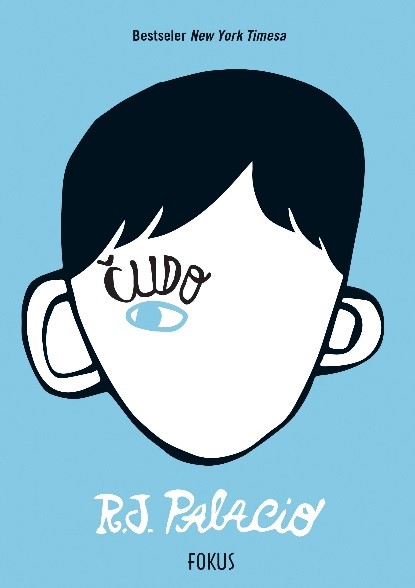
In addition to the novel Wonder, which describes Auggi's experiences in the fifth grade of Beecher School, the writer R. J. Palacio also wrote the novel Auggie and I - three miraculous stories in which we learn more about his class colleagues. By the novel Wonder, a film was created with the same name.
Short description of digital sources (applications, games, webpages, FB pages etc.)
The students watch the animated film Tolerance
https://meduza.carnet.hr/index.php/media/videos?pack=353
and the official movie trailer Wonder
www.youtube.com/watch?v=EsUKB4fh9fM trailer
Results
Expected outcomes:
Students will be able to:
- express their own literary text experience: how and to what extent literary text influences the formation of one's own attitudes and values
- perceive the ethical level of literary text
- recognize the purpose of the literary text: empowering emotions, empathy and human responsibility
- Explain the role of narrator in 1st person, the ethical characterization of the character
Recommendations
The book answers many questions: why is it important to go to school, to find and recognize a true friend, do I only have a problem with my brothers, whether I am accepted in family or in society, why this is happening to me ... In this novel, students can find the answer to many questions in seeking an identity and answering questions Who am I? and Who am I in comparison to others?
- Details
- Parent Category: Handbook
Book title
Trash
Author
Andy Mulligan
Bibliographic information
Publisher: Algoritam
Translated: Vedrana Zupanić
05/2013.
172 pg., hardcopy
ISBN 9789533164106
Links (adaptations, reviews, full texts etc.)
https://www.mvinfo.hr/knjiga/9133/smece
movie TRASH , 2014., Great Britain, Brasil, 104 min.
https://mojtv.hr/film/38955/smece.aspx
Theme
Honest and warm story about kids who live on a landfill
Short summary
In an unnamed third world country, not so far from the future, three boys live on a landfill and survive by digging up the mountains of trash in search for anything they could sell. One day, Raphael finds something very unique and mysterious – a leather bag with unusual content inside. He decides to keep it even though the police have offered a reward for whoever finds it.
However, the consequences of their decision can be scary and the three boys need to run for their lives and find out the true story behind the bag. Raphael, Gardo and Rat – boys with no education, parents, a home or money – will solve the mystery and amend justice.
Why is the story appropriate for the targeted groups of RSP readers?
- It refers to children of the lower social class (identifying one with the Roman national minority)
- Promotes voluntary work
- Promotes thoughts about abandoned and abused children.
What are the distinguished readers interests reflected by this book/story?
- Elements of a detective book
- Challenge the reality of facing real adult life
- Brave quest for the truth and justice
Why is this story motivational for the pupils?
It brings up different controversy’s and levels of the book – problem of corruption, change of narrator, problem of violence among children, identifying oneself with peers, question of identity – Who am I and who are my friends? What is our status in the society?
Is there a historical, political, multi/inter cultural, migrant or similar context recognized in this book/story?
Our society is still not on the edge to poverty. It recognizes the questions of social justice, faith in institutions, problems of corruption, the question of neoliberalism ideology – Who is stronger, oppresses?
Is there a principle of inclusion reflected in this book/story and does it promotes understanding of cultural diversities and heritage?
Inclusion is presented indirectly - the children are isolated, not included in the activities of the real world. Why doesn’t the government do something for them to integrate them to the system, why aren’t they included?
Comparison with inclusion in the Republic of Croatia is visible – are the poor ones isolated here, how and where do they live, what do people know about these problems?
- Details
- Parent Category: Handbook
Title of Activity
I fell in love
Description of educational activity
Duration: 2 x 45 minutes
Student age: 16 - 17
Student class organization: group work
Lecture goal:
- to recognize the problem of violence against children and the problem of corruption, the development of empathy, to analyze the narrator's position, to interpret the relationship between literary characters
Supporting materials
- Internet
- Magazines with everyday topics
Highlights:
- 3 texts
- sticky notes
Activity:
reading, interpreting, and discussing the text
-
Activity before reading
Provide motivation and background information to facilitate reading and put text in a broader, non-literary and literary context
Thematic Approach: Who Is Andy Mulligan? - Explore all about the author and his published works.
Thematic approach: Do clothes make you a man? - the influence of the consumer spirit - the purchase of branded clothing that is burdened by today's society, the symbolic value of goods, the strengthening of self-confidence.
Thematic approach: Volunteering - whether we are volunteering, whether there is a volunteer association in our neighborhood, what it deals with and in what way.
2. Reading activity
groups get assignment papers, and will read:
- the text in which the narrator is Olivia Weston (Part 3, Chapter 1) - students will analyze the relationship between her and Rat that becomes interpersonal (1st is "sister" and then "mother");
- explore the symbol of the names of Rat, Gardo and Dante
- find resemblance with the Roma national minority - a village that gathers for an individual;
- short paragraph about violence against children - narrator Raphael (part 2), students dramatize the fragment (within the group they share roles and perform it as a reportage from the field);
- short section on corruption - narrator is Rat (part 3), students need to detect the elements of the detective story through different tasks, shape the interview with the gardener, analyze the Annex of the book as proof of corruption.
3. Activity after reading
Talking about the events, does it remind us of some real life events? Do the characters remind us of some real life people?
Discussion about the end of the story - Did the boys do well? What could they do differently? Did you expect a different ending?
Comparison with the 2014 film of the same name (similarities and differences).
Connection to curriculum
Evaluation and Assessment Method:
Teacher Role - Prepare materials and act as a moderator
Evaluation – with the insert method, the students will mark what they are clear about, what they did not understand or expected and what should be further clarified.
Students are assessed on the basis of their ability to demonstrate:
- knowledge on the content and forms of literary text from different regions and cultures
- engagement with writers' ideas and dealing with topics
- Recognizing the ways in which texts relate to broader contexts
- recognition and appreciation of how writers create and shape meanings and effect empathy, through the re-creation of the voice and thoughts of the exalted character
The Impact of Activity on Reading RSP:
Practices initiate the process of thinking in students minds leading to what may be called greater cultural sensitivity, increased awareness of cultural differences and cultural communities - not only for race but also gender, social classes, etc.
Bibliographic reference to be used during the activity
https://www.mvinfo.hr/knjiga/9133/smece
film TRASH , 2014., Great Britain, Brazil, 104 min.
https://mojtv.hr/film/38955/smece.aspx
- Mulligan: Trash
- Publisher: Algoritam
- Translation to Croatian: Vedrana Zupanić
- 05/2013.
- 172 str., hard copy
- ISBN 9789533164106
Short description of digital sources
This paper uses books, films and book reviews from web pages.
Results
Students will be able to:
- Understand the importance of accepting others
- analyze the views that arise from the texts
- interpret the intention of the author
- Make a lot of well-chosen references to text
Recommendations
Such forms of text work will increase students' interest in reading as well as understanding the role of language in the text and will form their own reading style.
- Details
- Parent Category: Handbook
One feather[1]
(from the story collection 20 +1 best stories of summer 2014.)
Author
Ksenija Kušec


Bibliographic information
The short story 'One Feather' was published in a short story collection 20 +1 best stories of summer 2014. Until now on the internet portals, it was published under three titles: One feather, Grandma in my pocket and Revolution. Most often is it seen under the last name of the story collection Revolution
Author: Ksenija Kušec
Country: Croatia
Language: Croatian
Genres: Short story
Publisher: Brod knjižara, Zagreb
Year of publication: 2014.
Type of release: soft copy
ISSN 1849-0026
Links (adaptations, reviews, full texts etc.)
- https://www.vecernji.hr/kultura/revolucija-972367
- http://radio.hrt.hr/ep/boje-haljine-teta-vanda-ksenija-kusec/251042/
- http://fama.com.hr/ksenija-kusec-nije-dobro-naci-se-u-mojim-knjigama/
- https://www.youtube.com/watch?v=ARzRHBiumYI
- https://www.youtube.com/watch?v=v3EnYzQIdNE
Theme
The story is told in the first person by an unnamed girl who arrives at her grandmothers apartment too late, which is now an empty apartment. The owner of the apartment is now the bank. Even though the exact reason why the apartment didn’t stay in the family’s possession is unknown, we can guess it is about covering up debt by the repossession of movable possessions and real estate.
Short summary
She enters into her grandmother’s empty apartment, she’s too late, the bank has already emptied it, she wasn’t able to say goodbye to neither her things nor the space she was attached to as a child. She’s furious, but in the apartment, in the empty rooms, she is able to find memories of happiness she felt while being with her grandmother. She looks at the place where the stove was, where the flower pots were, and paintings, she also recalls the way the furniture looked like. She moves on to the kitchen and balcony… There is nothing there, only memories, scenes and conversations with her grandmother. She learnt a lot from her. It’s like she’s talking to herself, mentioning Eingemachtes, ashtray, soup pot… items that remind and bring her back to the past. From all her grandmothers’ stuff, she only found a feather on the floor. Furious and hurt with injustice, she decides to fight for her grandmothers’ possessions and apartment.
Why is the story appropriate for the targeted groups of RSP readers?
In the story, an everyday situation is brought up, actually it’s the reality of this world. Students know how to recognize injustice and similar or the same motives in literary texts. This story is suitable for a specific RSP group of readers as it encourages the understanding of problems of society this girl went through herself, through analyzing and interpretation this specific problem (she was left without the right of her family’s possessions). The situation she was put into leaves the students to feel empathy and have a certain amount of criticism towards the ineffective administration and bad system. This story is also suitable for working with students because of the linguistic features and style: contains Germanism typically used in conversational idiom of older people in Zagreb and northern parts of Croatia. This is why this text is good for a lingvo methodic template for class’s lexicology in the last year.
What are the distinguished readers interests reflected by this book/story?
Taken into consideration that social problems are everlasting and are present everywhere, this story can rise interest of the reader in various ways:
- The main character (and narrator) is a young person who decides to fight for her rights and oppose the bad system.
- Memories and returning back to her childhood and remembering a loved one – are general experiences which help readers to feel empathy towards the main character and find similarities with themselves.
- The text offers linguistic content that connects us to the past, brings up emotions towards memories and encourages us to think about real life problems.
Why is this story motivational for the pupils?
Students are faced with real life problems that are present in their surrounding whether its close or far, they find similarities in all personal experiences
Is there a historical, political, multi/inter cultural, migrant or similar context recognized in this book/story?
In this story, present and real social context is recognized: the amounts of social responsibility banks and state law have towards an individual, which most times end up feeling cheated on and unprotected.
[1] The same story can be found under three different titles; One feather, Grandmathor in my pocket and Recolution. However you will find that it is under the last title Revolution. The materials used here are under the title One Feather, unde which it was poblished in 2014 in the book collection 20 +1 best summer stories of 2014
- Details
- Parent Category: Handbook





Search


Contact
X gimnazija ''Ivan Supek''
Ul. Vjekoslava Klaića 7
10000
Zagreb
E-mail: partners@handbook4rspreaders.org